Gold prices are currently around $3,500 an ounce, and forecasts from banks like J.P. Morgan Chase predict highs of $4,000 by Q2 2026. If you’re starting and want to know how to invest in gold for beginners, this article is a great place to begin.
You can also check out gold industry resources from the World Gold Council to see the latest updates and market news.
Overview of gold investing
People usually purchase gold to diversify their portfolios and reduce the risk of losing all their money in other assets like the stock market, real estate, or bitcoin. Gold and sometimes other precious metals can rise during economic uncertainty, so many investors see it as a way to reduce the chance of losing everything if one part of their portfolio struggles.
History shows that gold prices often rise during times of uncertainty. We could be dealing with inflation, global conflict, or concerns about the dollar. People look for something solid they can count on whenever there’s fear or worry, and they have found gold to be that answer for thousands of years.
For everyday investors, there are several ways to get started. You can start with physical gold or, if you want, paper assets like gold ETFs or gold mining stocks. Each option has its own pros and cons, but they all give you a way to de-risk your portfolio.
Types of gold investments
Here are the ways you can get started with gold investing.
| Investment Type | What It Is | Pros | Cons |
|---|---|---|---|
| Physical gold | Tangible gold you can hold | Direct ownership Recognized worldwide Hedge against inflation/crisis Highly liquid | Premium over spotStorage/insurance |
| Gold ETFs | Shares in a fund that tracks the price of gold (paper gold) | Easy to buy/sell No storage needed Low minimum investment | No direct ownership of gold Reliant on fund managers Ongoing management fees |
| Gold funds | Mutual fund investing in gold stocks, ETFs, or securities | Diversified exposure Easy to trade | Paper gold Dependent on fund manager’s skill Management fees cut returns |
| Gold futures & options | Contracts speculating on future gold prices | High-profit potential Leverage | High risk Requires constant attention Complex and speculative |
Physical gold bars and coins
Physical gold investing means owning coins or bars that you can hold in your hand. When you buy gold bullion, you’re not depending on anyone else’s promise or a piece of paper tied to the price. You own a tangible asset with value recognized all over the world.
Pros of physical gold
The biggest benefit of physical gold is direct ownership. It’s yours and isn’t tied to a company, fund manager, or stock market. Investors have turned to gold for thousands of years as a way to preserve wealth, and many people see it as insurance against inflation or a financial crisis.
It’s also highly liquid, which means you can sell it to a dealer almost anywhere when you’re ready.
Cons of physical gold
Buying physical gold usually means paying a premium above gold spot prices, and you’ll need to decide how you want to store it. Some people use a home safe or a bank box, while others might go with professional storage.
Even with those considerations, owning physical gold gives you the security of knowing you hold something tangible that has stood the test of time.
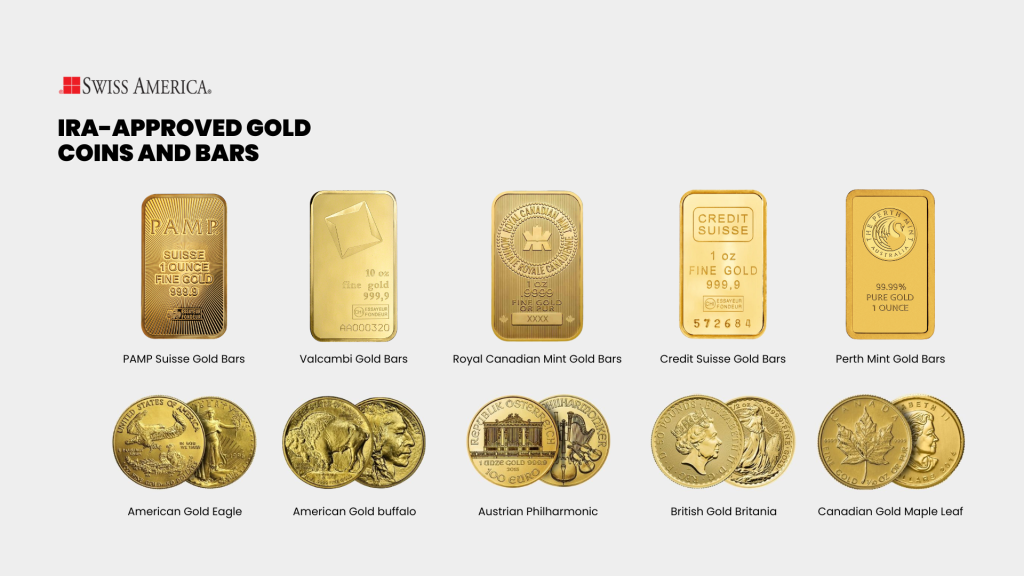
Examples of popular gold bullion bars and coins include:
Gold exchange-traded funds (ETFs)
Gold exchange-traded funds, or ETFs, are paper gold investments because you don’t own the actual gold itself. Instead of holding coins or bars, you’re buying shares in a fund that tracks the price of gold. These funds trade on the stock market just like regular stocks, which makes them easy to buy and sell through a brokerage account.
Pros of ETFs
The main advantage of gold ETFs is convenience. You don’t have to think about storing or insuring physical gold. You can also get started with a relatively small amount of money. Plus, if you need to sell, you can do so easily during market hours with just a few clicks through your brokerage account.
Cons of ETFs
When you own a gold ETF, you aren’t actually owning physical gold. You own paper tied to gold prices, so you’re relying on fund managers and financial institutions to deliver those returns. ETFs also have management fees that eat into your gains over time.
Investing in gold funds
A gold fund pools money from many investors and spreads it across different gold-related assets. This might include buying gold stocks in mining companies, a mix of ETFs, or other securities tied to the price of gold.
Pros of gold funds
The advantage of owning a gold fund is that you’re not relying on just one gold mining company or one type of gold investment. These funds are also easy to buy and sell through a regular brokerage account.
Cons of gold funds
The challenge with gold mutual funds is that they’re still paper gold. You don’t own any physical metal, and your returns depend not just on gold prices but also on how well the administrator manages the fund. Funds also have management costs that can cut into your overall gains.
Gold futures and options
Gold futures and options are some of the riskiest ways to invest in gold. Instead of buying physical gold, you’re trading contracts that bet on what the price of gold will be at a future date. Futures lock you into buying or selling gold at a set price. Options give you the right to make that trade. It’s basically speculation or hedging the gold market.
Pros of gold futures
The potential upside is that you can make a lot of money if your prediction is right. Futures and options also let you use leverage, so you can control a large contract with a relatively small amount of money up front. That’s part of what draws some traders in.
Cons of gold futures
The downside of futures contracts is that leverage works both ways. If the market moves against you, losses can pile up fast. Most everyday investors don’t use futures or options because they require constant attention, deep market knowledge, and the willingness to take on serious risk.
Benefits of investing in gold
One of the biggest reasons people invest in gold is for peace of mind. Physical ownership of gold coins or bars means you don’t have to rely on earnings reports, interest rates, or government policy for their value. The main benefits of investing in gold bullion include:
- Protection against inflation: From 2021 to 2023, we saw some of the highest levels of inflation in decades. At one point, prices rose more than 9% year over year. During that same time, gold prices rose between 4% to 13% annually. That steady rise helped investors protect their buying power when groceries, gas, and everyday costs kept going up.
- Portfolio diversification: People add gold because it doesn’t always move with stocks or other asset classes. For example, in 2022, the S&P 500 dropped almost 20% while gold held its ground, and in 2025, gold is up more than 30% while stocks are only showing single-digit gains.
- Safe-haven asset: Gold prices tend to perform well when there’s uncertainty. During the pandemic in 2020, it broke above $2,000 for the first time, and here in 2025, it’s above $3,400 as investors worry about inflation, global conflict, and the dollar.
- Store of value: Over time, gold holds its worth. If we look back, it was about $1,500 an ounce in 2019, and today, it’s more than $3,400. That’s actually a very short timeline in which investors saw gold bullion hold its worth.
- Hedge against currency devaluation: When the dollar weakens, gold usually strengthens. For example, in 2023, the dollar fell around 10% while gold gained over 13% that same year.
Getting started with owning gold
If you want to add gold to your portfolio, start by deciding how you want it to fit into your overall plan.
Questions to ask:
- Why am I considering gold right now?
- What are my investment objectives?
- Am I looking for protection against inflation, or do I just want more balance alongside my stocks and other assets?
- What’s my risk tolerance, and how long do I plan to hold gold?
Most investors don’t put everything into gold. Some set aside 5% of their portfolio, others closer to 10% depending on how cautious they feel. If you’re just getting started, you might begin smaller and build over time as you see how gold fits into your overall plan.
Choosing a gold dealer
When you’re ready to buy, research reputable gold dealers. The right company makes the whole process easy, from buying your first coin to selling it down the road. Look for a company like Swiss America that has:
- A track record of decades in business
- Strong customer reviews
- Educational resources to help you learn about gold investing
- Membership in industry groups or associations
- Gold bars with assay certificates
- Gold coins with certificates of authenticity or third-party certification
Common mistakes to avoid when buying gold
If you’re thinking about gold, there are a few mistakes you’ll want to avoid. One is falling for scams. High-pressure sales pitches, overpriced coins dressed up as “collectibles,” or websites that promise guaranteed returns usually end up costing people more than the gold is worth. Sticking with a dealer that’s been in business for decades and has great reviews can protect you from scams like this.
Another mistake is not paying attention to fees. You don’t buy gold at the spot price you see online. There’s premiums, shipping costs, and sometimes storage charges. If you don’t ask questions before you buy, you might be surprised later by fees that add up.
Our other key piece of advice is not to think of gold as a short-term strategy. Prices may go up or down, which is why it’s best to take a long-term view.
Final thoughts on buying gold
As you can see, there’s more to investing in precious metals than just buying silver or gold jewelry. But investing in gold bars or coins is a great way to own a defensive asset that can provide a kind of insurance for when other assets turn volatile.
Learn about gold investing today from the team at Swiss America.
How to invest in gold for beginners: FAQs
How much money do I need to start investing in gold?
You don’t need a huge amount to get started with bullion. Many people begin with a single coin, which can cost a few hundred dollars depending on the size and current gold price. Bars come in smaller weights, too, so you can start with as little as a few hundred and build from there over time.
What is the 20 year return of gold?
Gold’s average return over the past 20 years is about 10% per year. Depending on the timeframe, the market price of gold went up anywhere from about 560% to over 1,000%. That kind of growth is why many people still see gold as a reliable hedge against inflation and market uncertainty.
Is it worth investing in gold for beginners?
Yes. Gold can be a smart starting point for beginners. It’s simple to own, helps diversify your portfolio, and gives you protection during market volatility.
The information in this post is for informational purposes only and should not be considered tax or legal advice. Please consult with your own tax professionals before making any decisions or taking action based on this information.